
Where moisture usually enters first
Terrace slabs, wet bathrooms, utility areas, and balcony edges are the most common entry points. Once water reaches the plaster layer, it can travel sideways before the stain appears on the wall or ceiling.
That is why local inspection matters. If the team only treats the visible stain, the deeper leak path remains open and the same issue comes back after the next wet spell.
- Terrace cracks around old repairs
- Bathroom joints near the floor and wall corners
- Balcony slab edges and parapet details
- Pipe penetrations and utility area junctions
Why bathroom and terrace treatments are different
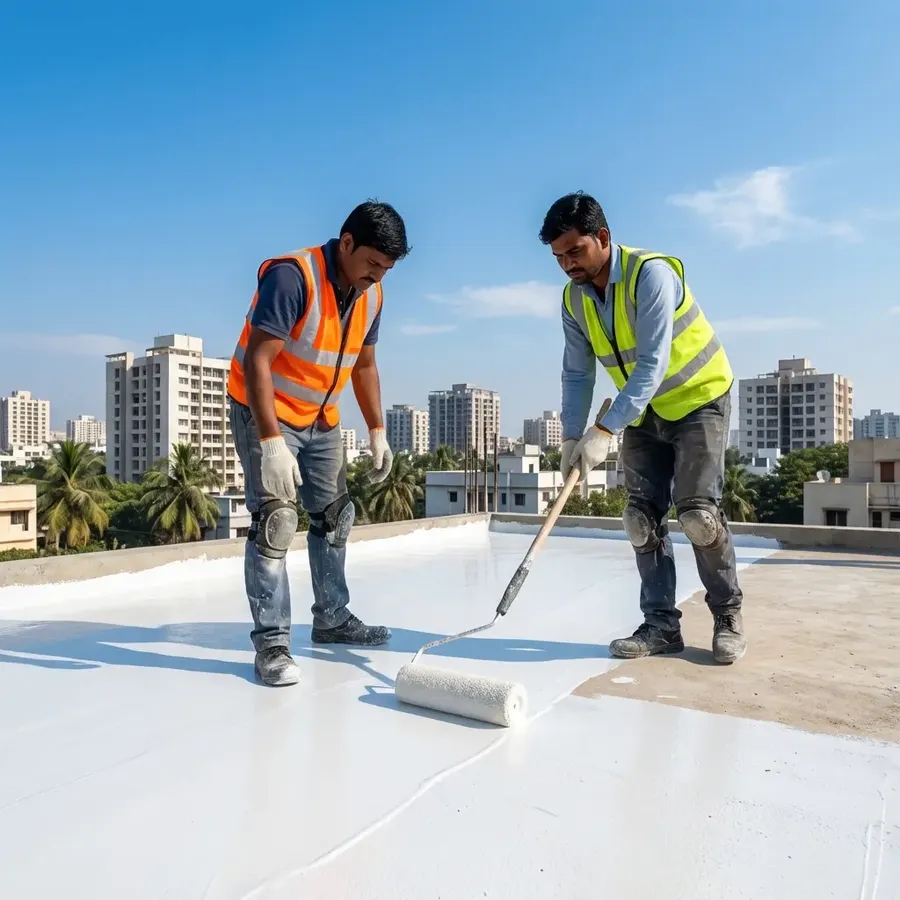
A terrace system needs to handle sunlight, temperature change, and standing rainwater. A bathroom system has to handle repeated wetting, tile joints, and hidden seepage below the finish layer.
Using the same material everywhere is a common mistake. The most effective result comes from matching the product and method to the space that is actually failing.
- Terrace work usually needs surface preparation and slope checks
- Bathrooms may need joint sealing and tile-level treatment
- Balcony edges often need focused crack and edge repair
- The inspection should separate each problem zone clearly
What homeowners should ask before quoting work
Ask for a clear scope, not just a rate. The scope should say which area is being treated, what materials are being used, and how the team will confirm the repair after curing.
If the inspection report is vague, the quote will usually be vague too. The best way to avoid surprises is to make the defect list and repair plan explicit from the start.
- What exact area is leaking and why?
- Is the problem local or spread across the slab?
- What preparation is included in the price?
- How will the final leak check be handled?
Need this handled on site?
We inspect the problem before quoting. That keeps the repair scope, materials, and timing aligned with the actual condition of the slab or roof.