Why terrace patches fail in Anna Nagar homes
A quick patch can hide the symptom, but it rarely solves the moisture path. Once water is already inside the slab, the same weak spot keeps reopening after each rain or heat cycle.
Older apartments in Anna Nagar also face movement at parapet joints and around pipe penetrations, which means the repair has to include the full junction detail and not only the flat surface.
- Repeated patch layers with no crack mapping
- Loose plaster around parapet corners
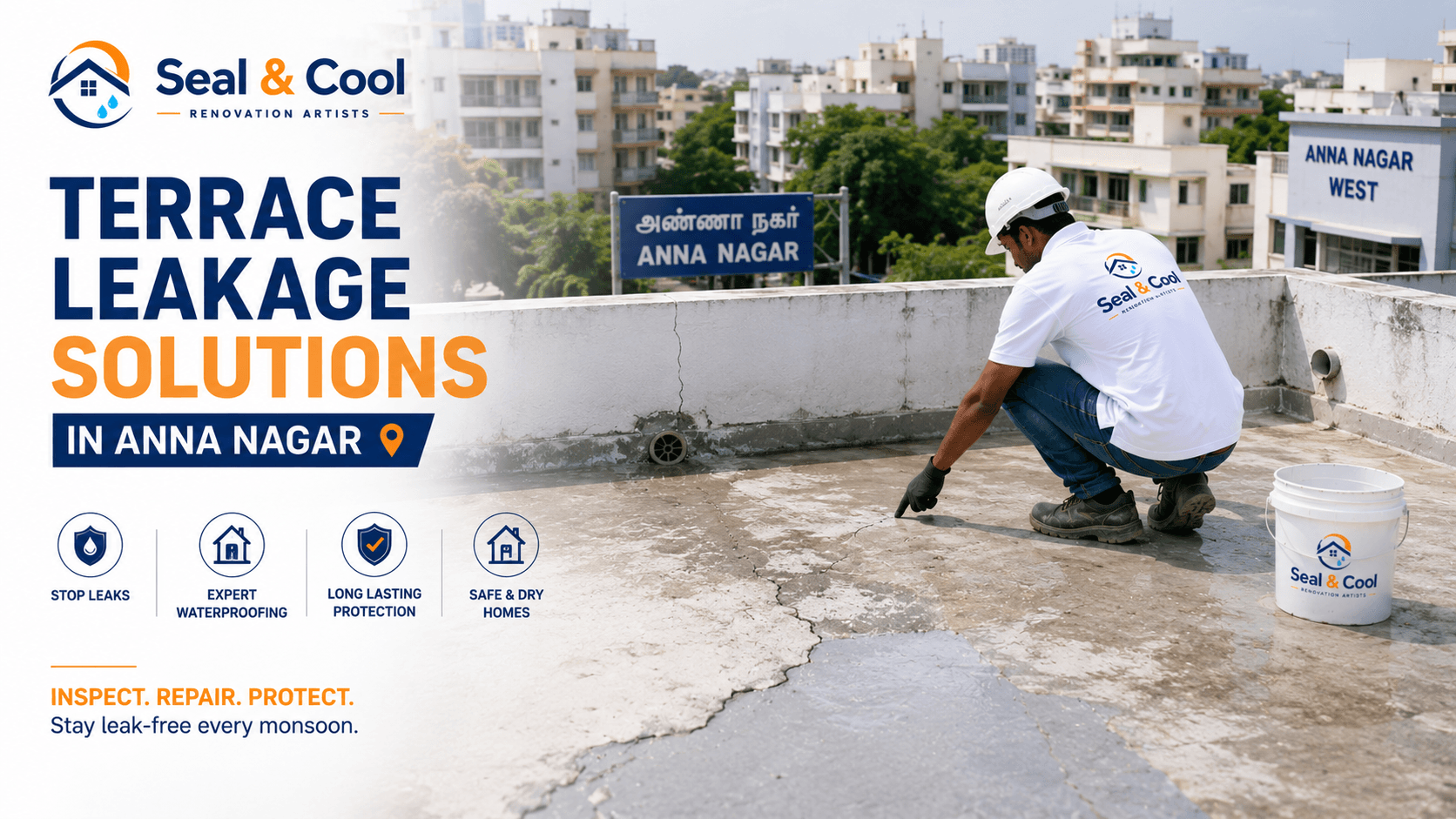
- Standing water near outlets and low points
- Hairline cracks widening after heat and rain cycles
What to inspect before starting work
A real inspection should check the slab slope, drainage outlets, parapet joints, and any old membrane or coating that has already failed. Without this step, the same leak path will remain active below the new finish.
That is why a proper inspection is more useful than a blind quote. It saves time, reduces rework, and helps the team choose the correct system for the terrace condition.
- Map visible cracks and damp patches
- Test how fast water drains after cleaning the terrace
- Check parapet wall joints and pipe collars
- Confirm whether the roof needs slope correction
How to choose a lasting repair method
If the terrace surface is structurally stable, targeted crack sealing and coating may be enough. If the slab is holding water or the old repairs have already failed multiple times, a deeper system is usually required.
The best answer is not always the most expensive one. It is the one that matches the actual damage and gives the roof a clean, durable finish after curing.
- Use targeted repairs for small localized failures
- Use membrane systems for repeated seepage or roof movement
- Confirm the final cure and water-ponding test before handover
- Keep the maintenance schedule documented for future checks
Need this handled on site?
We inspect the problem before quoting. That keeps the repair scope, materials, and timing aligned with the actual condition of the slab or roof.