Why Chennai homes feel hotter on upper floors
Upper floors and terraces absorb direct solar radiation for longer hours than shaded walls. That means the roof surface gets much hotter than the air temperature, and the heat moves inward over time.
In many homes, the result is higher air conditioner usage, faster fan fatigue, and room temperatures that never seem to stabilize in the afternoon.
- Flat RCC roofs store and radiate heat
- Dark or weathered roof surfaces absorb more sunlight
- Poor ventilation traps heat in the top floor
- Old coatings lose reflectivity and stop performing
What cool roof coating actually changes
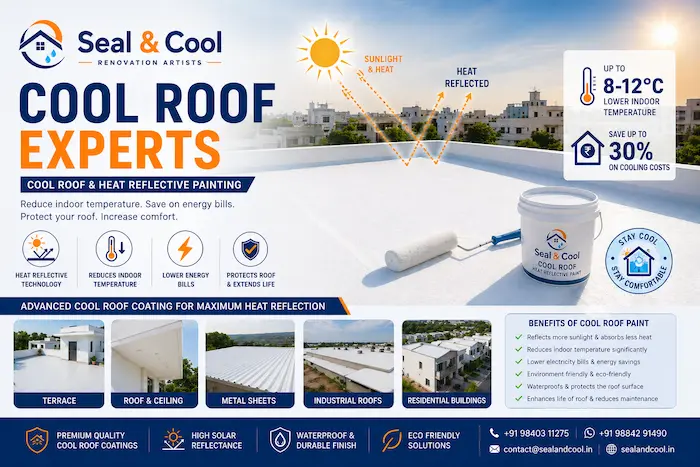
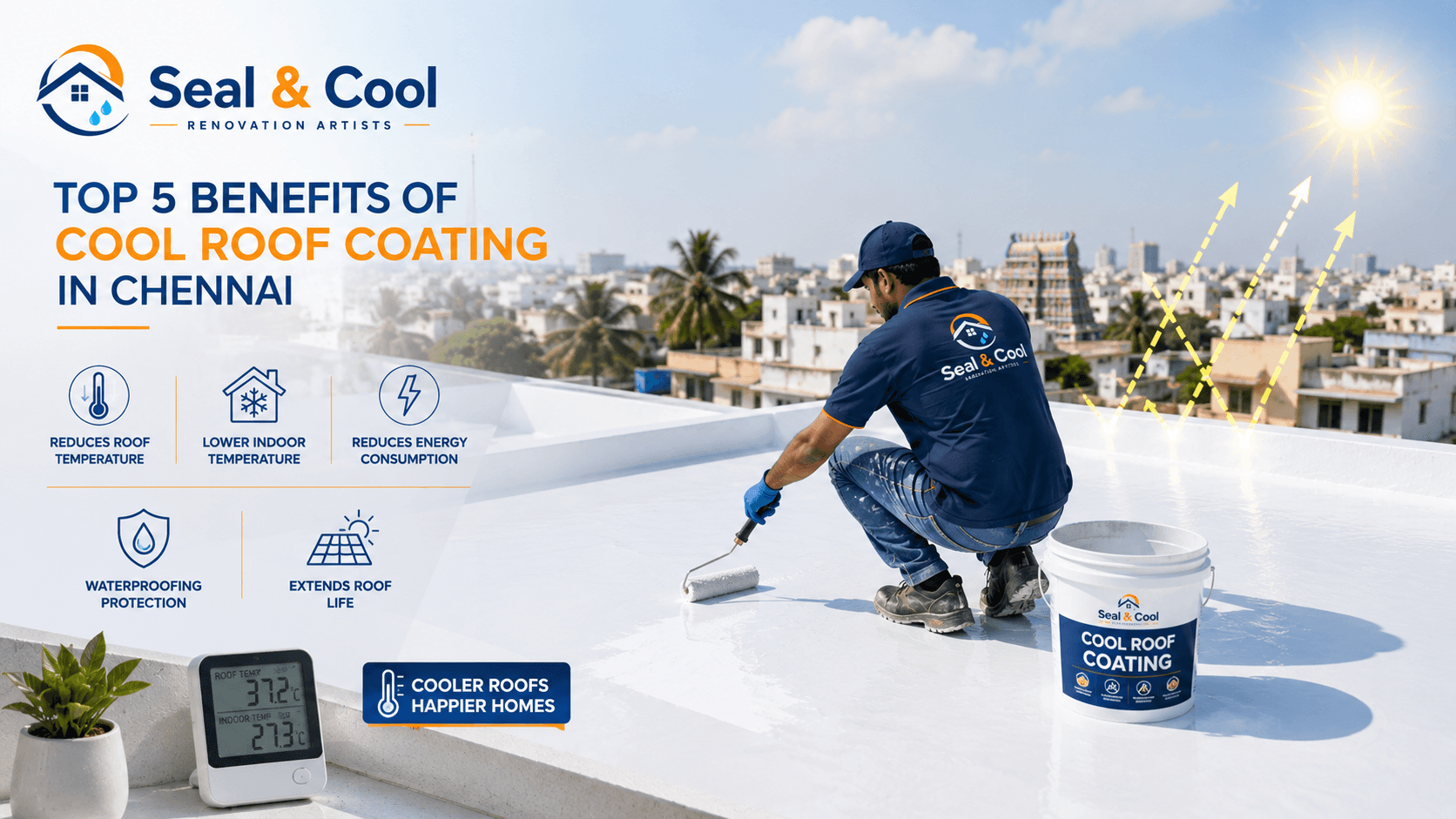
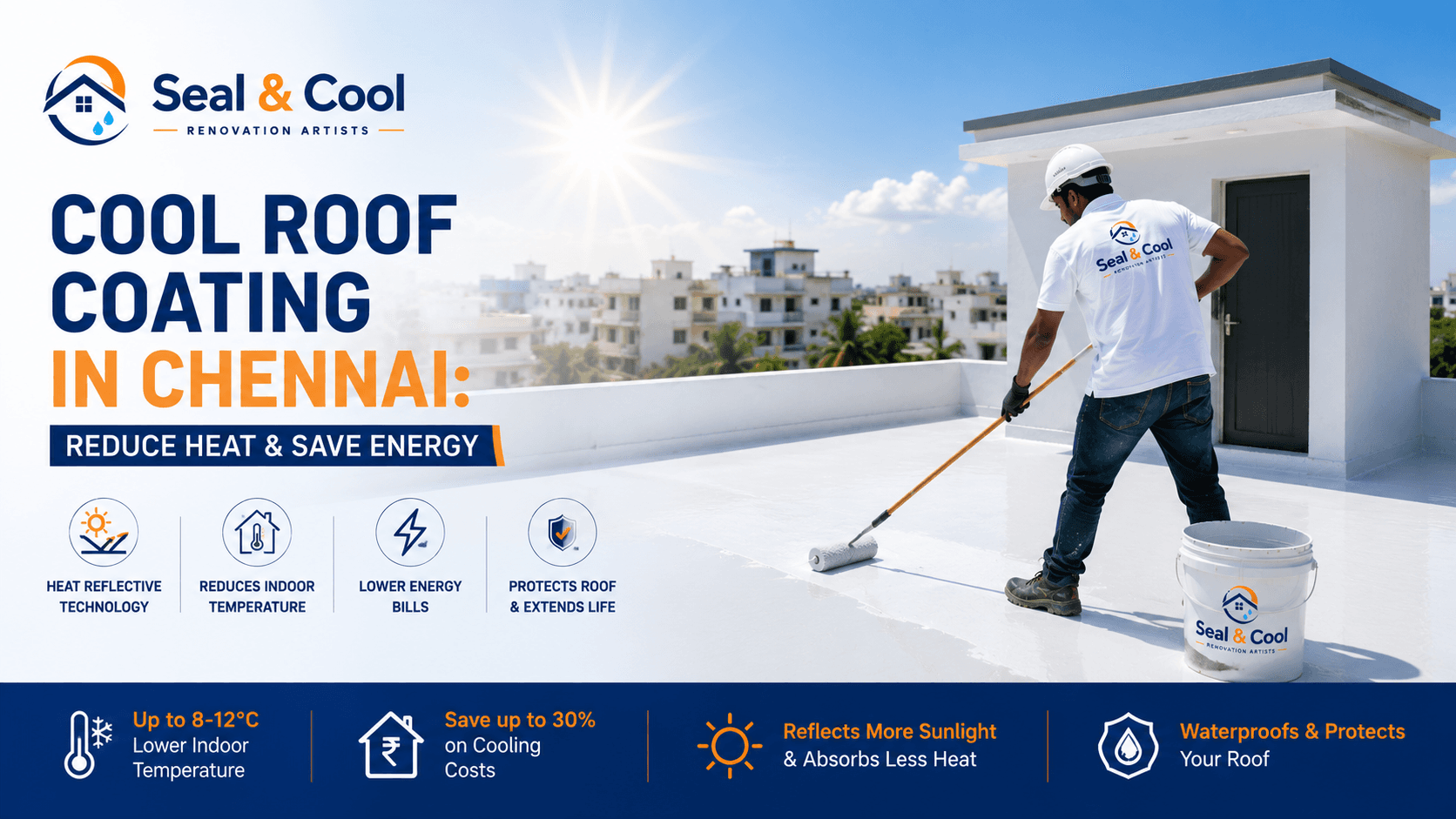
A cool roof coating reflects more sunlight than a standard roof paint. That lowers the surface temperature of the slab, which reduces the amount of heat reaching the rooms below.
The benefit is not just comfort. Better thermal performance can also reduce load on cooling systems and slow down weathering on the roof surface.
- Improved daytime comfort in upper rooms
- Less heat stored in the roof slab
- Reduced stress on roof finish and waterproof layers
- Lower cooling cost during peak summer months
Where it works best
Cool roof coating works best on terraces, villa roofs, and top-floor slabs that receive direct sun for most of the day. It is also valuable for lightweight roof structures and commercial buildings with high roof exposure.
Before painting, the roof should be cleaned, checked for cracks, and prepared properly. Reflective paint is effective only when the base surface is sound and the application is done correctly.
- Residential terraces and top-floor apartments
- Independent houses with exposed concrete slabs
- Commercial rooftops with long sun exposure
- Projects that need heat reduction without major reconstruction
Need this handled on site?
We inspect the problem before quoting. That keeps the repair scope, materials, and timing aligned with the actual condition of the slab or roof.