
How cool roof paint works
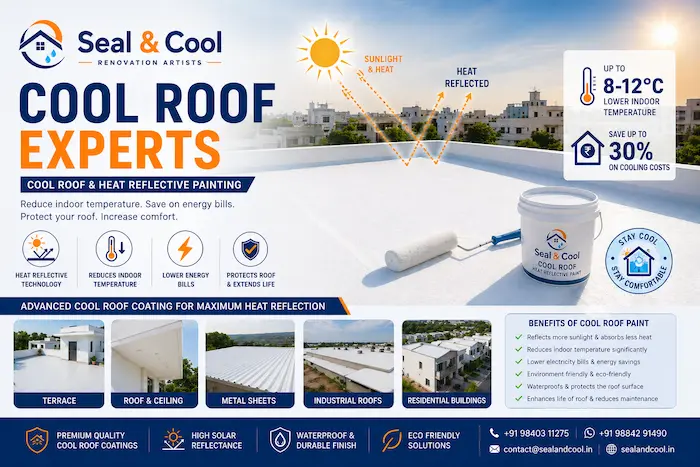
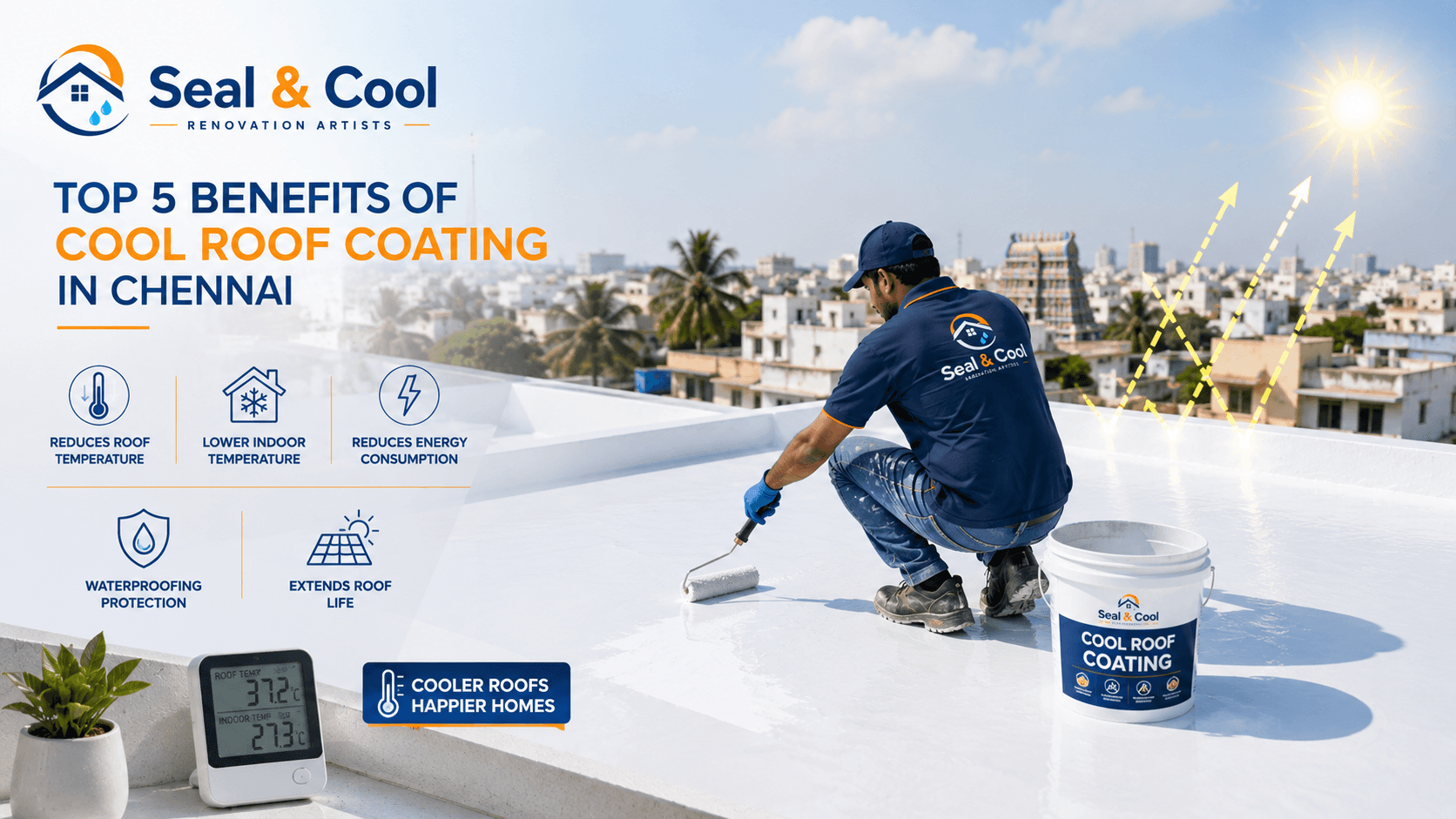
Cool roof paint uses a light, heat-reflective surface to reduce solar absorption. It is applied over a cleaned and prepared terrace, usually with primer and multiple coats based on the selected system.
It adds little weight and can be completed relatively quickly. Periodic cleaning and recoating may be needed as the surface weathers and becomes dirty.
- Lower initial cost than tile installation
- Minimal added roof load
- Faster application on suitable surfaces
- Needs preparation and future maintenance
How cooling tiles work
Cooling or weathering tiles create a reflective and walkable finish above the terrace. The installation includes surface preparation, slope correction where needed, adhesive or bedding, tile laying, and joint treatment.
Tiles usually cost more and add weight, but they can provide a durable finish for frequently used terraces. Joints, outlets, and perimeter details must be executed carefully to avoid future water entry.
- Durable surface for regular terrace use
- Higher material and installation cost
- Adds load that should suit the structure
- Requires correct slope, joints, and drainage
Cost, timeline, and maintenance comparison
Seal & Cool's indicative range for cool roof paint is Rs. 28 to Rs. 45 per sq.ft, while cooling tile installation is approximately Rs. 85 to Rs. 120 per sq.ft including materials. Site repairs can change either estimate.
Paint generally needs less installation time. Tiles involve setting, alignment, joint work, and curing, but their hard surface can suit terraces that receive regular foot traffic.
- Paint: lower cost and shorter installation
- Tiles: higher cost and stronger walking surface
- Paint: inspect for fading, dirt, and worn patches
- Tiles: inspect joints, cracks, and drainage
A practical decision guide for Chennai homes
Choose reflective paint when the roof is sound, lightly used, and the priority is affordable heat reduction. Consider tiles when the terrace is regularly occupied and the structure, drainage, and budget support a permanent tiled finish.
Neither choice should be made before checking active leakage and slope. A site inspection can identify whether waterproofing or structural repair must come before the cooling system.
- Select paint for a light, economical reflective layer
- Select tiles for a durable walkable terrace
- Resolve leakage and slope defects before either system
- Confirm structural suitability before adding tile load
Need this handled on site?
We inspect the problem before quoting. That keeps the repair scope, materials, and timing aligned with the actual condition of the slab or roof.